Rereading the madeleine scene
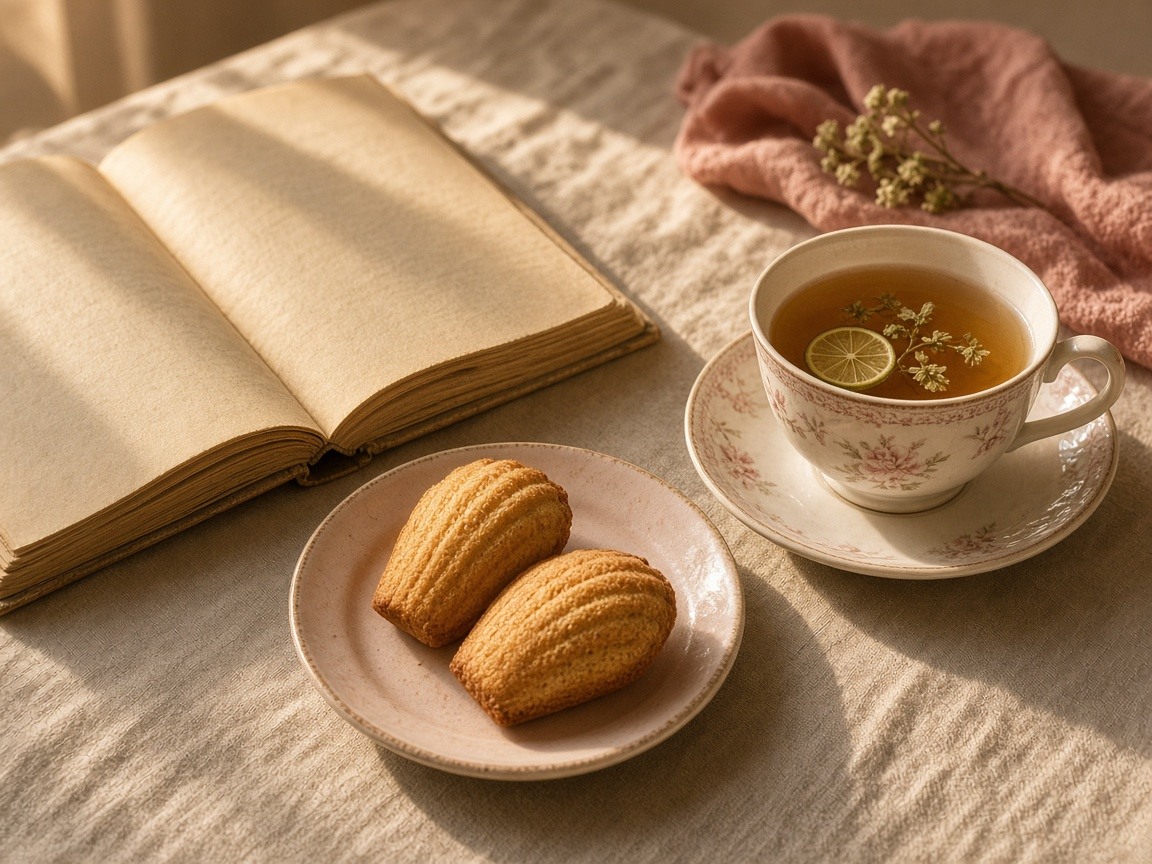
The madeleine episode in Swann’s Way is so famous that rereading it feels like visiting a landmark that has been photographed too often. I opened C. K. Scott Moncrieff’s translation on a grey morning, poured a cup of tea, and set out two madeleines I had bought at the bakery on the corner—the shell-shaped sort, pale gold and slightly dry, nothing like Combray but close enough to invite imitation. I was not staging a séance. I only wanted to see whether the prose still shivered when the cup was real.
Proust still worked. That irritates me in the best way. The narrator dips the cake, shudders, and the past arrives intact:
“And at once the vicissitudes of life had become indifferent to me, its disasters innocuous, its brevity illusory—this new sensation having had on me the effect which love has of filling me with a precious essence;”
Moncrieff’s “precious essence” is fragrant rather than analytical. I sipped tea while I read the sentence again. My own childhood room has no Combray; it has yellow wallpaper and a bunk bed with a squeaking ladder. Yet the mechanism Proust describes—sensory trigger, sudden occupancy by another year—is universal enough that I felt my shoulders loosen.
What changes on each reread is my impatience with the narrator’s digressions before the dip. Pages of sleep and stone floors and the goodnight kiss. This time I welcomed them. Slow reading means you are not hunting the famous moment; you live in the hallway until you reach the kitchen. The kiss on the forehead landed harder knowing how long the adult Marcel will spend trying to recover it through art.
I walked to the postbox afterward, rain just stopping. Steam rose from a grate; for a second I was ten, carrying a letter to a friend who moved away. Proust would call that trivial. I call it the point. The scene is not about pastry. It is about how memory chooses you when you are not performing nostalgia.
Back home I copied a line into my notebook, not the whole paragraph, just the trembling recognition that life’s length is illusory in that instant. I left the second madeleine on the plate until evening, when it crumbled at the first bite. A small, ordinary echo. Enough for one chapter, one day.
People treat the madeleine as a lesson in craft, as if literary memory were a recipe you could follow. Rereading reminds me it is closer to weather: you cannot schedule the moment the past arrives. You can only leave yourself room to notice. That is why I keep this diary at walking pace. Proust spent thousands of pages earning his dip in the cup. I am willing to wait a few more evenings before turning the page to Gilberte.